Dorset Gardens New Condo Pricing Guide: Checklist for Buyers
If you have been watching Dorset Gardens for the past few months, you have probably noticed the pattern that shows up with every new launch in District 8. The attention starts early, the location story gets shared widely, and then the real question lands much later, usually right when the first pricing sheets and unit mix hints appear.
For buyers, pricing is never just a number. It is the sum of land economics, unit mix, leasehold terms, competition nearby, and how quickly the developer wants to move inventory through launch and beyond. And because Dorset Gardens is still at the pipeline stage, the smartest approach is to prepare now, before the hype turns into a decision you can only make with limited information.
Below is a practical pricing guide and buyer checklist built around what is known about Dorset Gardens today, plus the exact questions to ask so you can assess whether the eventual Dorset Gardens pricing makes sense for your budget and your exit timeline.
What Dorset Gardens is, and why pricing will be shaped by the fundamentals
Dorset Gardens appears to be an upcoming private condominium project on Dorset Road in Singapore’s District 8, in the city-fringe area near Farrer Park MRT. District 8 city-fringe projects often attract buyers who want proximity, lifestyle convenience, and a more “liveable” daily routine than what pure suburban developments can offer.
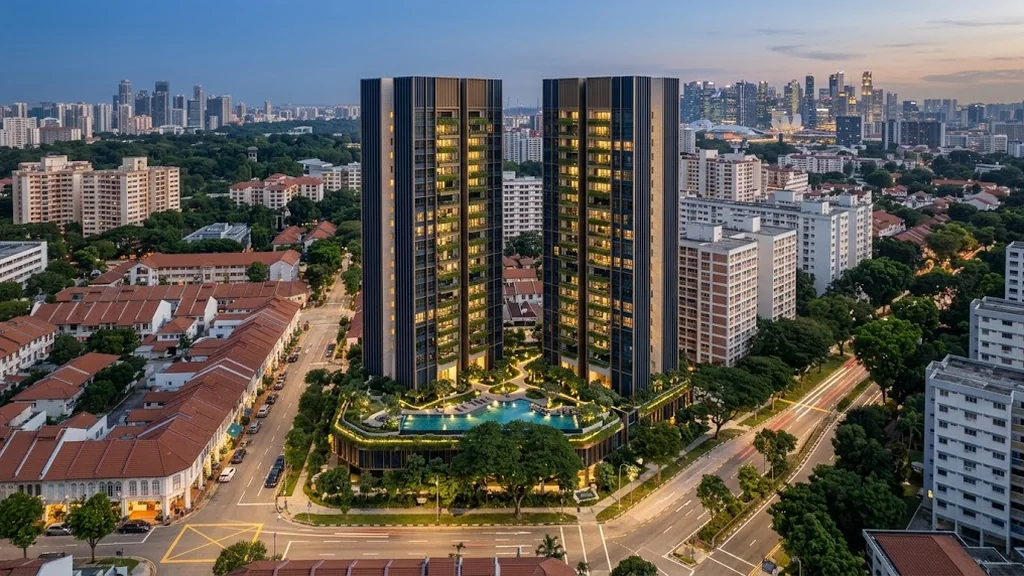
What matters for pricing is that Dorset Gardens is not a small infill gamble. The planned scale is around 428 units across two 28-storey residential towers, on a 10,399 sq m leasehold site. A project this size tends to be priced and marketed with multiple buyer types in mind. You will usually see a range from smaller, more accessible units to larger formats designed for owner occupiers and families.
The development structure is also relevant. The site was awarded by URA following the Government Land Sales plot process, and the winning bidder was a consortium led by UOL together with SingLand and Kheng Leong. The UOL materials that identify the project structure also indicate an 80:20 joint venture between UOL and Kheng Leong, with SingLand part of the development structure.
That consortium detail matters less for daily living, but more for how the project’s commercial strategy might be run. Larger Singapore developers often have a clear playbook for launch phasing, payment scheme structuring, and pricing bands. For you, the takeaway is simple: when Dorset Gardens eventually launches, its pricing will likely be consistent with a broader pipeline strategy rather than an ad hoc “trial and error” approach.
When launch is likely, and what that means for your pricing expectations
Based on UOL’s FY2025 materials, the target launch is in 1H2027. Dorset Gardens pricing will be influenced by conditions at the time the developer finalizes marketing and release plans closer to launch. That can mean pricing could hold steady relative to the neighborhood’s direction, or it could reprice upward if the market tightens and strong demand appears earlier than planned.
As a buyer, you should not treat “target launch 1H2027” as a promise. It is a planning anchor. Still, it gives you something valuable: you can structure your preparation around the reality that launch information will arrive closer to the release period, not months earlier.
If you are trying to lock in early pricing, keep your expectations grounded. Before the developer releases confirmed units, verified pricing bands, and documented payment terms, you will mostly see early signals rather than the final numbers you can rely on. In other words, you should plan to evaluate the pricing when it is offered, not when it is guessed.
Leasehold considerations: the silent pricing driver
Dorset Gardens is on a leasehold site. Leasehold projects carry a pricing and sentiment adjustment that many buyers underestimate. Even when the unit layout and finishes look attractive, lease duration affects long-term value, resale outlook, and buyer demand in later years.
Since the verified information currently confirms leasehold but does not provide the lease length, you should treat this as a must-check item the moment the developer provides the brochure or sale terms. If you are comparing different developments, leasehold differences can sometimes overwhelm small differences in “distance to MRT” or interior specs.
Practical reality from past launches: buyers who do the math early tend to negotiate more confidently. They may accept a higher launch price if the lease remaining is strong enough for their holding period, or they may avoid paying a premium if the lease remaining compresses the runway for resale.
Location value in pricing: city-fringe convenience usually attracts competing demand
Dorset Gardens is described as being near Farrer Park MRT and schools such as St. Joseph’s Institution, and Dorset Road is framed as an attractive city-fringe location. These factors typically support price resilience because they create multiple daily demand drivers:
- commuting practicality for working adults
- school adjacency and family convenience
- a broader catchment that can include both owner occupiers and investors
What does this mean for Dorset Gardens pricing? In most city-fringe areas, new condo launches compete for the same buyer pool as resale condos and other new launches with similar access and lifestyle convenience. When supply is tight, pricing power improves. When competition increases, developers sometimes offer a more “structured” pricing strategy, such as more aggressive incentives during launch periods, or a pricing mix that aims to sell enough units quickly.
You cannot predict which scenario you will face for Dorset Gardens today. But you can prepare to evaluate the pricing relative to the neighborhood at the time it launches.
Why unit count and tower count can affect your “fair price” perception
Around 428 units across two towers sounds like enough volume for variety. That matters because pricing is not only about the overall project price level. It is also about the unit mix and the distribution of “best units.”
In many new launches, buyers obsess over the headline price per square foot without realizing that:
- Lower floors and less efficient configurations may be priced to move gradually.
- Corner units and better orientation layouts may be held at stronger pricing bands.
- Higher floors sometimes carry a premium, but the premium is not always proportional if the market does not reward view.
With two towers, developers may also stage their releases by tower or by stack. That means you can see different pricing bands within the same project depending on what is being launched first.
So when Dorset Gardens pricing comes out, do not treat the first numbers as universal. Compare units within the same launch batch. If the developer releases mixed categories early, you will need to focus on comparable sizes and similar layout efficiency, not just the same “bedroom count.”
The buyer’s pricing checklist for Dorset Gardens
Since confirmed launch pricing, unit mix, verified amenities list, brochure details, and the balance unit situation were not found as confirmed facts in primary sources during the research stage available here, you need a checklist that helps you verify everything the moment the developer or their appointed marketing team supplies the official information.
Here is the approach that protects you from paying a “pretty marketing price” for a unit that does not fit your long-term plan.
- Request the official sale terms and confirmed lease information before you focus on any headline price.
- Verify the exact unit sizes, floor levels, and stack layouts shown in the pricing table, then compare apples-to-apples.
- Confirm the payment scheme details and what costs are included versus excluded, especially during early booking.
- Ask how Dorset Gardens pricing will be released by phases or batches, so you know whether early release is priced as a premium or as a sales push.
- Compare the offered price against nearby comparable units you can actually transact on around launch time, not just older listings.
If you do only one thing, do this: insist on seeing the verified, official pricing and sales terms for the specific stack and unit size you are considering, then evaluate based on your holding period and resale comfort.
How to read Dorset Gardens pricing when the numbers finally appear
When new condo pricing lands, it often arrives with incomplete context. Buyers get a headline range, then a few standout examples, then a flurry of urgency. This is where judgment matters most.
Here are the practical lenses I use with clients when a pricing sheet drops, especially for a project still heading toward a 1H2027 target launch.
1) Treat “per square foot” as a guide, not a verdict
Developers and marketers can make a project look cheaper if the measurement method, unit efficiency, or mix skews the average. Your job is to convert the headline into your real decision by looking at the total payable amount, the unit’s usable layout, and whether the price reflects the unit’s position.
If two units have the same bedroom count but one is clearly more efficient, you should expect it to price differently, and you should not assume the less efficient unit is automatically “better value” just because the price per square foot looks lower.
2) Don’t ignore the lease impact when comparing launch prices
For leasehold, the difference between “comfortable holding period” and “running out of runway” can show up in resale demand patterns years later. Since the verified facts here only confirm leasehold, you must check the actual remaining lease at purchase and the likely timeline for major events and resale buyer psychology.
A unit that feels affordable at launch can become harder to move later if your holding period does not line up with buyer sentiment for lease remaining.
3) Watch whether the pricing strategy looks like “market positioning” or “inventory clearance”
Even without confirmed balance unit data, you can learn a lot from the release structure when it is announced. If the first batches are priced aggressively and move quickly, you can infer demand is strong and the developer may hold later batches firmer.
If the initial release prices are high but incentives or payment structures are more flexible, it can indicate the developer is trying to create momentum and manage demand while watching interest rates and market direction.
Your goal is not to predict the developer’s mood. Your goal is to decide what you can afford, comfortably, and whether the pricing fits your strategy.
4) Keep an eye on location-driven competition at launch time
Dorset Gardens location near Farrer Park MRT and in District 8 city-fringe tends to put it in competition with both resale condos and other new launches in similar convenience bands. When you evaluate Dorset Gardens pricing, compare it to what buyers can reasonably choose around the same period.
If resale prices are close to launch pricing once you account for renovation needs and transaction friction, buyers have a choice. That choice can pressure a developer to offer more compelling numbers or incentives.
If resale supply is thin and demand stays concentrated, launch pricing can hold firmer.
The questions to ask during Dorset Gardens brochure and showflat sessions
You mentioned Dorset Gardens brochure and the idea of booking appointments and viewing showflat. Even without confirmed brochure details in the research stage here, the disciplined way to approach it is the same: arrive with questions that force clarity on pricing, terms, and unit specifics.
Here are the questions that usually separate a confident purchase from a regretful one:
- What is the exact unit size used for the pricing, and how does it map to practical layout and buildable area?
- What is the verified lease information and remaining tenure, and how does it affect the resale outlook for your holding period?
- Are there any differences in pricing by tower, stack, or floor level within the first release batch?
- What incentives are tied to booking timelines, and what costs are non-negotiable or excluded?
- If I buy now, how is the project payment schedule structured, and what milestones determine when funds are due?
You want answers you can document, not vague statements. If a team member cannot provide precise details during the appointment, that is not just an administrative inconvenience. It can mean the pricing or unit allocation is still fluid, and that uncertainty should affect how urgently you commit.
Trade-offs buyers often miss with new condo pricing in city-fringe projects
City-fringe demand has a way of making people rationalize compromises. Sometimes the compromise is fine. Sometimes Dorset Gardens Floor Plan it silently breaks your long-term value.
Here are a few trade-offs I see often when buyers compare new launch opportunities like Dorset Gardens, especially when the project details are still evolving until closer to the 1H2027 target.
First, buyers may overpay for “future convenience.” A location like Dorset Road near Farrer Park MRT can indeed be highly convenient, and it can support demand. Still, convenience does not automatically justify an oversized premium at launch. Your decision should rest on whether you are paying a fair entry price relative to comparable alternatives.
Second, buyers may underestimate stack and floor effects. Two units that look similar on a sales brochure can feel very different in daily use, noise exposure, and how sunlight lands in the living areas. When pricing is released, ask for stack-specific comparisons rather than relying on generic floor plan diagrams.
Third, buyers may treat leasehold as a minor footnote. In practice, leasehold affects long-term resale comfort. If your plan is to hold for a short horizon and then sell, you need clarity on whether the market at that time will reward your purchase price.
A simple way to decide whether Dorset Gardens pricing is “buyable” for you
Even without confirmed pricing today, you can set a decision framework so that when the numbers arrive, you do not freeze.
Start by defining your maximum purchase price based on what you can comfortably service and what you are willing to lock in for your likely holding period. Then, map that maximum to the type of unit you want, based on size, floor, and layout efficiency.
Once you receive Dorset Gardens pricing, you should be able to answer three questions quickly:
- Does the total payable amount fit your budget comfortably, not just the initial price?
- Is the leasehold reality compatible with your resale expectations?
- Is the stack and unit position worth the premium the developer is charging?
If you cannot confidently answer those questions, postpone the emotional decision. A new launch is still a product. You are buying a specific unit, not a sales story.
What to do now, before the official Dorset Gardens numbers land
Because Dorset Gardens is still targeting 1H2027, you have time to prepare. Use it well. Your goal is not to obsess over rumors, but to make sure that when Dorset Gardens pricing is finally confirmed with unit tables, sale terms, and brochure details, you can evaluate it fast and accurately.
In practical terms, that means:
- Keep track of your budget range and what transaction costs you can tolerate.
- Decide what unit type you actually want to live in, not just what seems “cheaper” on paper.
- Prepare your questions for the brochure and showflat appointment so you do not spend the session negotiating clarity under pressure.
Dorset Gardens has identifiable fundamentals already, from its District 8 city-fringe location near Farrer Park MRT to the planned scale of about 428 units across two 28-storey towers on a leasehold site. Those fundamentals will shape the eventual pricing. Your best advantage is to wait for the confirmed numbers, then decide with a checklist and a clear internal price ceiling.
When the pricing finally arrives, the buyers who do well are rarely the ones who rush first. They are the ones who ask the right questions, verify the sale terms, and match the unit to their plan with calm, grounded judgment.